Search engine optimisation has a strange problem.
It’s one of the most data-driven corners of digital marketing. Yet it’s also one of the most prone to bad advice, misinformation, and outright fiction.
The reason myths are persistent because SEO changes constantly.
What was good advice in 2016 is completely different now. Even past statements from Google have been updated, contradicted, or clarified as the search engine changes for user behaviour.
Yet old advice keeps circulating, repeated by freelancers, agencies, LinkedIn posts, and well-meaning YouTube videos, long after it stopped being accurate.
This guide covers many SEO myths we hear to help inform your marketing strategies. From our ears to your, learn from leading digital marketers in Glasgow.
Why SEO Misconceptions and Common SEO Myths Are So Persistent
Most SEO myths start with a kernel of truth that’s then taken out of context, applied too rigidly, or repeated long after the underlying reality has changed.
The advice that was good once is now penalised, but it’s still sitting on old blog posts and in the memories of people who learned SEO a decade ago.
The second reason is that Google doesn’t give away its playbook.
The company publishes best practices and general guidance.
But the exact weighting of different ranking factors is kept deliberately vague. That vagueness creates space for theories, and theories harden into received wisdom whether they’re right or not.
The third reason is the SEO industry itself.
Sketchy freelancers and agencies need to sell services, and sometimes the easiest way to do that is to create urgency around a myth.
So let’s debunk some of the biggest SEO myths that cause problems for businesses.
Myth 1: SEO Is Dead
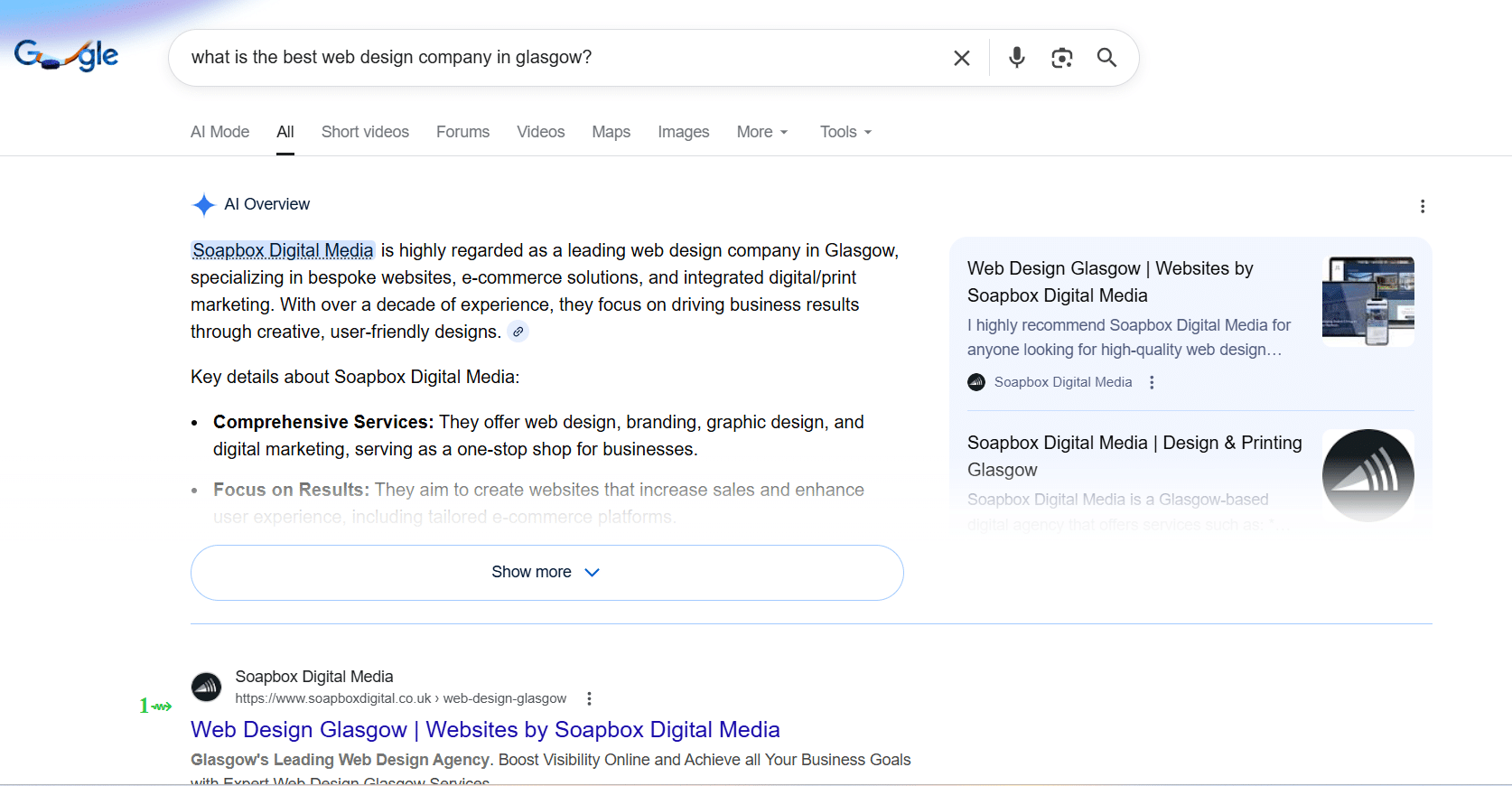
Every few years, someone announces that SEO is dead. The latest version circling blames AI.
But with Google’s AI Overviews, ChatGPT, and zero-click searches growing, surely organic search is finished?
It isn’t.
SEO has evolved, but it hasn’t died. People still search. They still click.
Of course, the way they search is changing (more conversational queries, more voice, more AI-assisted research), but the underlying principle that businesses need to be findable when people look for what they sell is unchanged.
The SEO landscape shifts constantly.
What’s “dead” is the version of SEO that relied on keyword stuffing, link farms, and thin content. But that deserved to die anyway.
For businesses that invest in SEO properly, organic traffic is still one of the most reliable sources of leads and sales. The field is also evolving to incorporate ways to feature in these AI overviews and snippets to get businesses seen by the right audience.
SEO is a long-term strategy, not a dead one.
Myth 2: SEO Is a One-Time Job
Some businesses treat SEO as a project. They hire an agency, launch the optimised site, then stop. That’s like hiring a gardener to cut the grass once and expecting the garden to look good a year later.
Google updates its algorithm thousands of times a year.
Competitors change their content. Your own website gets new products, new pages, and new issues. SEO needs ongoing attention because the environment is always moving.
An effective SEO strategy runs continuously, with monthly check-ins on rankings, content updates, technical fixes, and new content creation.
Budget accordingly.
A one-off SEO project can lay foundations, but the ongoing work is where results come from.
Myth 3: Keyword Density (and Keyword Research) Is a Ranking Factor
Old SEO guides obsess over keyword density. This is the percentage of times your target keyword appears in the content. Aim for 2%, they’d say, or maybe 3%, but definitely not 5% or you’ll be penalised.
Keyword density hasn’t been a meaningful ranking factor for years.
Google’s algorithm uses natural language processing to understand topics and context, not exact keyword counts.
Keyword stuffing, which is the repeatition of the same keyword over and over to try to rank, actively harms your SEO performance because it signals low-quality content.
What matters is writing naturally about a topic, using synonyms and related terms, and answering the actual question the user was searching for.
If you do that, the keyword density takes care of itself.
Myth 4: More Backlinks Always Mean Better Rankings
Backlinks remain an important ranking factor, but the myth is that quantity matters more than quality.
It doesn’t.
Ten links from respected industry publications are worth far more than a thousand links from irrelevant directories, comment spam, or paid link schemes.
Google’s algorithm looks at the authority and relevance of the site linking to you, the context of the link, and whether the link looks natural.
Buying backlinks in bulk is one of the fastest ways to trigger a manual penalty that can take months to recover from.
The top of the search results is won by earning links through good content, genuine PR, and building relationships in your industry.
Never by racing to accumulate the highest link count.
Myth 5: Domain Authority Is a Google Ranking Factor
Domain authority (DA) is a metric created by Moz and other third-party SEO tools.
It estimates how likely a site is to rank. It’s useful as a proxy for link profile strength, but Google doesn’t use it.
When people say “you need a DA of 40 to rank” or “I boosted my DA from 25 to 50”, they’re talking about a third-party score, not a Google signal.
John Mueller and other Google spokespeople have repeatedly confirmed that Google doesn’t have a single “domain authority” metric.
They use many signals to evaluate sites, and these signals vary by query.
Focus on the underlying factors (quality content, relevant backlinks, good user experience) rather than chasing a Moz or Ahrefs number.
Myth 6: Meta Keywords Still Matter
The meta keywords tag was a way to tell search engines what a page was about. It was gameable within a week of its introduction.
Google stopped using meta keywords for ranking in 2009. Bing doesn’t use them either.
If someone tells you to fill in the meta keywords field for SEO, they’re working from a 15-year-old playbook.
The meta description still matters for click-through rate. But for rankings, it is obsolete.
Myth 7: You Need to Write Content for Search Engines
This is one of the most harmful SEO myths because it produces content that’s bad for humans and bad for rankings at the same time.
Writing for search engines used to mean jamming in keywords, using unnatural phrasing, and repeating terms to hit density targets.
Google’s algorithm has been designed for years around “helpful content” signals.
Write for the reader first. Answer their question clearly, make it easy to scan, and provide genuinely useful information.
The SEO content that performs best in 2026 is content that solves a real problem for a real person, not content engineered for an algorithm.
The irony is that well-written content for humans tends to rank better than awkward SEO-optimised content, because Google’s algorithm rewards engagement signals.
If your visitors are spending more time on the page, clicking on different pages per session, and returning to your site, this is a signal that your website has valuable content.
Myth 8: Page Speed and Core Web Vitals Don’t Really Matter for Technical SEO
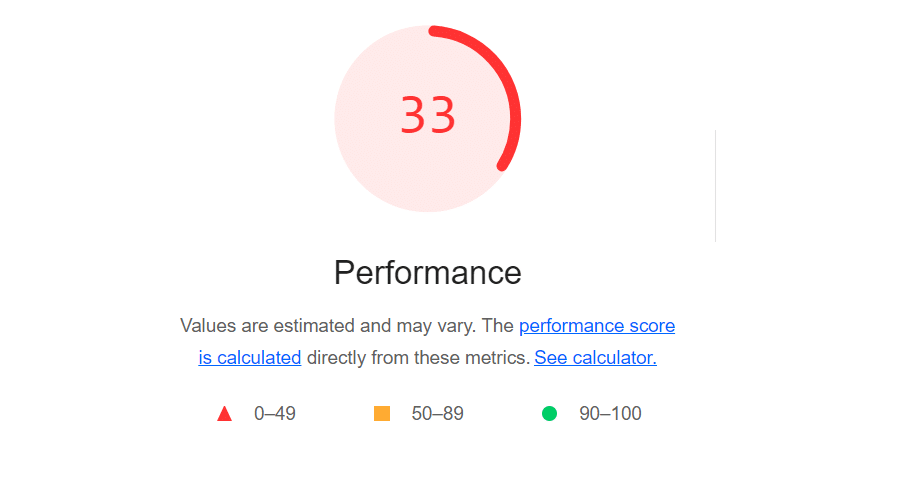
Some older SEO advice treats page speed as a nice-to-have rather than a ranking factor. That’s wrong.
Google’s Core Web Vitals are explicit ranking signals, and slow pages lose visibility in competitive searches.
Beyond the direct ranking impact, page speed affects user experience directly.
Visitors who wait more than three seconds for a page to load tend to bounce. Bounce signals send negative engagement signals back to Google.
Fast sites rank better because they keep users happy, and Google notices.
Tools like PageSpeed Insights, Lighthouse, and GTmetrix are free and give you a clear starting point.
Hosting quality, image compression, minified code, and a content delivery network are where most technical SEO gains come from.
Myth 9: You Need to Submit Your Sitemap to Google Every Time You Publish
Submitting a sitemap through Google Search Console is useful, particularly for new sites or sites with lots of pages that might not be discovered through internal linking alone.
What you don’t need to do is re-submit the sitemap every time you publish a new blog post. Google crawls sitemaps automatically once it knows about them.
If you’ve added your sitemap in Search Console once, you’re fine. Google will check it on its own schedule.
Re-submitting constantly doesn’t make your pages index faster on search engine results.
Myth 10: Local SEO Doesn’t Matter If You’re Not a Local Business
Local SEO is often pigeonholed as “for plumbers and restaurants”.
But in reality, any business that serves customers in specific areas benefits from local SEO, including B2B consultancies, professional services, agencies, and even online-first businesses that have a physical office or showroom.
Google Business Profile, local citations, and location-specific content help you appear when people search for services in your area.
Even national brands with multiple locations use local SEO to rank for “near me” searches in each city they operate in.
If your business has any geographic component to it, local SEO is well worth the effort.
Myth 11: AI Content Is Automatically Penalised by Google
The rise of ChatGPT and other AI models triggered a wave of articles claiming Google would penalise AI-written content. The reality is more nuanced.
Google’s position is that content should be helpful, regardless of who or what wrote it.
Low-quality AI content will be penalised because it’s low quality, not because it’s AI. This affects SEO the same way any other thin or unhelpful content does. Badly.
Well-edited AI-assisted content that adds genuine value can rank perfectly well.
The issue is the people using AI to mass-produce generic content for SEO purposes, not AI itself.
If you’re using AI as a tool to support good writing (research, outlining, first drafts), your content can compete.
If you’re publishing raw AI output with no editing or added insight, expect to struggle.
Our own view is that AI is a tool, like any other. The skill is using it well.
Myth 12: Zero-Click Searches Mean SEO Is Pointless
Zero-click searches (this is where the user gets the answer directly on the search results page and doesn’t click through to any site) have grown over the past few years. This is largely driven by the rise of AI overviews.
Some commentators interpret this as the end of organic traffic.
The reality is that zero-click searches tend to be for informational queries where a quick answer is all the user needs.
Commercial queries, where people are researching products, comparing options, or looking to buy, still generate plenty of clicks, because those users need to see specific sites to make their decision.
If your SEO efforts focus on transactional and commercial keywords relevant to your business, zero-click searches aren’t really your problem.
If you rely heavily on traffic from short informational queries, you may need to rethink which topics you’re targeting.
Myth 13: AI Overviews Will Destroy Organic Traffic
AI Overviews have caused anxiety in the SEO industry. Will businesses lose all their organic traffic to these AI summaries?
Early data suggests the impact is real but uneven.
AI Overviews tend to appear for informational queries where a summary is useful, and they often cite the sources they’re drawing from.
Sites that are cited frequently in AI Overviews can actually gain visibility because users still click through for more detail.
Sites whose entire strategy was built on ranking for broad “what is X” queries may lose traffic.
The response isn’t to abandon SEO.
It’s to focus on content that AI can’t easily summarise.
Original research, expert analysis, case studies, product comparisons, local information, and other material that requires reading the full page to get the value.

Myth 14: More Pages Equal Better Rankings
Some SEO strategies push businesses to publish as many pages as possible on the theory that more content equals more rankings. This is wrong in two important ways.
First, thin content that has little useful information can trigger the Helpful Content system and actively hurt your overall site performance. Publishing 50 weak pages is so much worse than publishing 5 strong ones.
Second, duplicate or near-duplicate content across multiple pages causes cannibalisation.
This is where your own pages compete against each other for the same queries. One strong page usually outranks multiple thin ones.
Focus on creating fewer, better pages that genuinely serve a need.
Myth 15: SEO Is Failing and Paid Ads Are the Only Answer
A certain type of marketing advice suggests businesses should stop investing in SEO entirely and put everything into Google Ads and paid social.
The argument is that organic is too slow, too uncertain, and increasingly crowded out by ads and AI.
In practice, SEO and paid advertising work better together than either does alone.
PPC gives you immediate visibility for commercial keywords. SEO builds long-term organic visibility that doesn’t disappear when you stop spending.
A balanced digital marketing plan includes both, and the right mix depends on your industry, your budget, and your timeline.
Businesses that have abandoned SEO in favour of paid-only strategies often find themselves paying more and more per click with no fallback when budgets get cut. Treating SEO and PPC as rivals is a misconception in itself. They’re complementary.
What Genuinely Affects SEO Performance
With the myths cleared out of the way, here’s what genuinely moves the needle in 2026.
High-Quality Content
Google’s Helpful Content System rewards pages that solve problems clearly and completely.
Thin, generic, or clearly AI-spammy content loses.
Technical SEO Fundamentals
Fast page speed, clean site architecture, proper indexing, mobile-friendly design, and HTTPS are table stakes.
Legitimate Backlinks from Trusted Sites
Links earned through PR, quality content, and industry relationships still matter, and probably always will.
Strong User Experience
Design, navigation, page layout, and the overall feel of the site affect engagement signals that feed back into rankings.
Consistent, Sustained Effort
SEO is a long-term strategy. Short bursts of activity followed by silence rarely deliver results. Monthly work over the years does.
Need Help Separating SEO Facts From The Fiction?
Worried about how myths and misinformation have affected your digital marketing? That’s where we come in to help!
At Soapbox Digital Media, we help businesses across Glasgow, Scotland, and the wider UK develop SEO strategies that deliver measurable results to help you achieve your KPIs.
We base our work on things that work. Not fictions that have been passed around the internet.
Our SEO specialists and marketers stay on top of the latest changes so you don’t have to, and we’ll tell you the truth about what’s worth doing, what isn’t, and what will actually drive traffic to your site.
To learn more about our services, call us today on 0141 429 1356 or get in touch through our website. We’ll take a look at your current SEO and give you an honest assessment, minus the scaremongering.