When we talk about using AI in business, we aren’t talking about replacing your workforce or some sci-fi transformation of how companies operate. We are talking about easy changes to the way you operate so you spend less time on repetitive tasks and more time on what actually earns you money.
You’ve probably heard a lot about AI in the news and media, but if you’re not sure where to start or how to use it, you’ve come to the right place.
No jargon, no hype, just practical ways to use AI that you can try this week. Let the Soapbox team help you explore how AI implementation can work in your business.
AI tools for small businesses – Content creation and marketing campaigns
This is where most business owners start, and it is pretty easy to do.
Artificial intelligence for written content
AI tools such as ChatGPT, Claude, and Gemini can draft blog posts, write social media captions, create email subject lines, brainstorm campaign ideas, and repurpose existing content into different formats.
A task that used to take an afternoon can be done in twenty minutes.
For small businesses without a dedicated marketing team, these artificial intelligence tools are a genuine productivity boost.
The important word there is “draft.” AI content needs editing, more often than not, a lot of editing.
Your content needs to hold your brand’s voice, expertise, and knowledge of your customers.
The businesses getting the best results are the ones that use AI tools to speed up the first draft for the skeleton of the piece, then add the human intelligence and detail that makes it worth reading.
If you publish AI outputs without editing them, your audience will notice and your Google rankings will suffer.
Use of AI for visuals
AI image generators like Midjourney and DALL-E can create visuals for social media posts, blog headers, and presentations when you don’t have a budget for a photographer or designer.
They won’t replace professional design work (you’ll still want a proper designer for your branding and website), but for day-to-day content and blog posts, they can be genuinely useful.
You can even use AI to create visuals for a new business launch or rebrand without waiting weeks for a designer.
Many AI tools in this space are free or low-cost, so you can experiment without committing to anything.
AI use cases for customer service
If you’ve ever wished you could answer customer questions at 2am without actually being awake at 2am, AI chatbots are the answer.
Online chatbots
AI solutions like Tidio, Intercom, and Drift let you set up AI-powered chat on your website that can handle common questions about your products, services, pricing, and opening hours without a human being involved.
But AI assistants have come a long way from the frustrating chatbots of the past.
They can now understand context, pull information from your website and knowledge base, and know when to hand over to a real-life person.
AI call answering systems
For small businesses that can’t afford a full-time receptionist or customer service team, AI can improve response times and ensure you never miss an enquiry. This is one of the most common AI use cases because the benefits of AI are immediate and measurable.
AI call answering is another option.
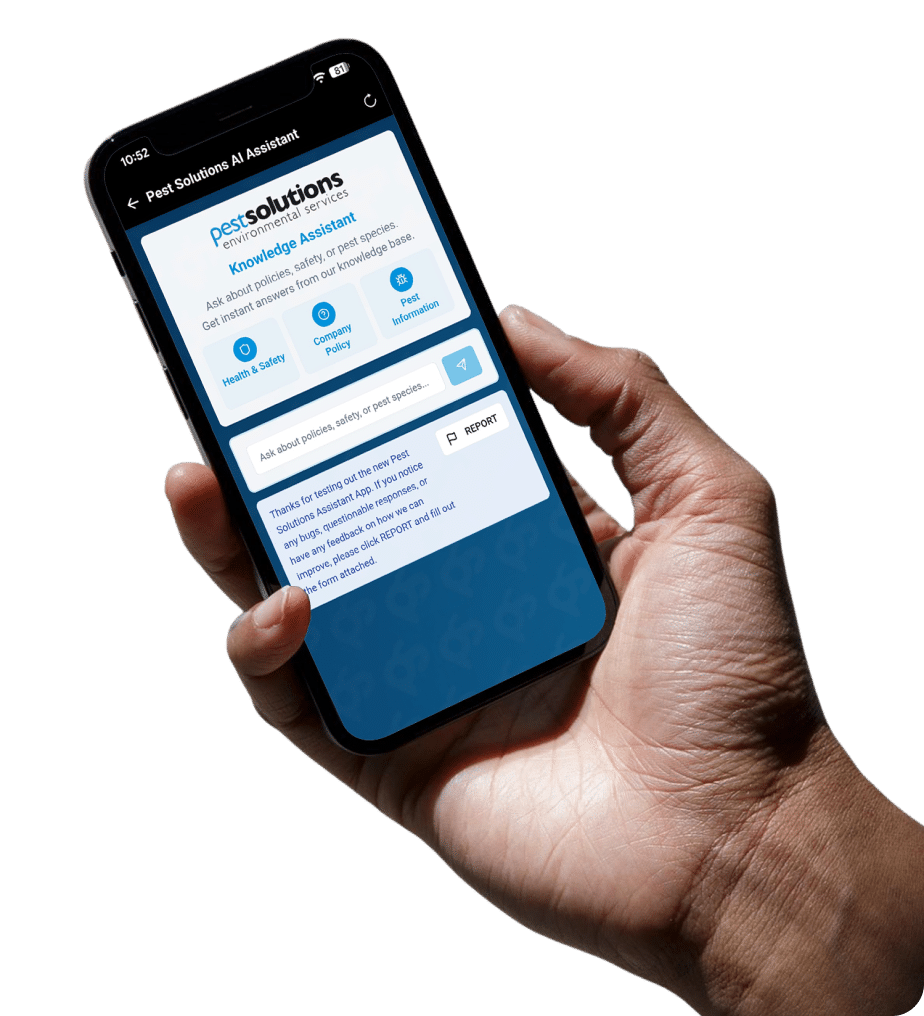
At Soapbox, our tech savvy team builds AI call answering systems for small businesses so you never miss a lead, even when you’re on site, in a meeting, or off for the day.
It’s one of the ways that AI can help small businesses compete with larger companies that have dedicated reception staff.
Using AI for data analysis and business decisions
Most small businesses are sitting on business data they never look at.
Website analytics, sales figures, customer purchase history, and email open rates. It’s all there, but who has time to dig through it?
AI tools can do that digging for you.
Google Analytics 4 already uses machine learning to surface predictive analytics, like which customers are most likely to buy again or which pages on your site are underperforming.
AI tools can analyse spreadsheets of sales data and pull out trends you’d never spot by scanning rows manually.
You can ask it questions in plain English (“Which products had the biggest drop in sales last quarter?”) and get an answer in seconds.
AI analytics turns raw numbers into actionable insights that help drive better business decisions, and the uses for this kind of analysis are growing every month.
For business owners making business decisions based on gut feeling rather than data, this is where AI delivers the biggest return. You stop guessing and start shaping your business strategies around actual numbers.
These tools can help you spot opportunities, cut waste, and make smarter calls about where to invest your time.
Integrating AI to automate day-to-day business operations
Operational systems and AI
Beyond marketing and customer service, AI can streamline the operational tasks that eat into your day.
Scheduling, invoicing, stock management, document processing, and email sorting.
These are the jobs nobody enjoys, but everyone has to do. They’re exactly the kind of business processes that AI technologies are built to handle.
For example, when a new enquiry comes through your website form, AI systems can automatically add them to your CRM, send a confirmation email, create a task for your team to follow up, and log the lead source for reporting. Teams can use these workflows to save time and resources that would otherwise go into manual admin.
Making business easier with transcription
AI transcription tools can also help with meetings, transcribing everything, and producing a summary with action points.
If you’ve ever left a meeting and immediately forgotten what was agreed, this solves that problem.
AI for SEO and getting found online
AI is changing how people search, and that affects how your business gets found.
Google’s AI Overviews now appear on roughly half of all searches, summarising information from websites at the top of the results page.
Other AI tools like ChatGPT and Perplexity are being used as search engines in their own right, with users asking direct questions and getting answers that reference specific businesses.
The businesses that show up in these AI-generated answers are the ones with clear, well-structured content on their websites. Your website content matters more than ever.
If your site answers real questions thoroughly and accurately, AI tools are more likely to reference you. But if your business doesn’t have quality content or hasn’t been updated in years, you’re invisible to AI search.

Generative engine optimisation (GEO)
A completely new field has started gaining traction in the world of digital marketing, it is called generative engine optimisation, or GEO for short.
This strategising and structuring ways for your content to be picked up and understood by AI tools.
It’s still very early days, but the businesses investing in quality content now are building an advantage that will compound as AI search grows.
Agentic AI, where AI systems independently research and recommend businesses to provide solutions to user queries, makes this even more important.
How to get started with AI across your business
The biggest mistake business owners make is trying to implement AI everywhere at once.
You don’t need an AI strategy document or a digital transformation roadmap. You need to pick one task that eats your time and see if an AI tool can do it faster.
Start small and build from what works.
Here’s a practical starting point for this week.
Pick your biggest time drain
What’s the task you do every week that’s repetitive, boring, and doesn’t need your specific expertise?
This could be email drafting, social media captions, data entry, scheduling, or even report writing.
That’s where your AI journey should begin.
Pick a free tool first to practice good AI prompts
There are plenty of free tools available, from the free version of ChatGPT, Google’s Gemini, and Microsoft Copilot.
Before you upgrade to anything that costs money, experiment with improving your prompts.
The more context you give, the better the output. Good AI prompts are the difference between AI that saves you time and AI that creates more work.
Never publish before improving
A word of caution about using AI. It isn’t perfect and it sometimes makes things up.
It’s called a hallucination, and it means AI systems will sometimes state things as fact that are completely wrong.
Always check facts, figures, claims, and content before using AI-generated content publicly. Your name is on it, not the AI’s.
Human insight and editing is what turn raw AI output into something trustworthy.
Build business uses from there
Once you’ve found one use of AI that saves you time, try another.
Most businesses can use AI for content creation first, then customer service, then operations, then data analysis.
It grows naturally once you see the value, and adopting AI gradually is far more effective than trying to transform your business overnight.
What AI won’t do for your small business
AI isn’t a strategy. It’s a tool. It should always be used alongside human judgement, not instead of it.
AI can’t fix a broken business model, replace genuine expertise, or build relationships with your customers.
When used carelessly, generative AI can also create a lot of problems. So integrating AI into your business practices needs careful thought, not just enthusiasm.
For example, Google penalises low-quality, unoriginal webpage content. Businesses that use AI to draft content should always refine it to bring something new to the field and incorporate their own expertise to create something genuinely useful.
There are also ethical considerations.
If you use AI to generate content, be transparent about it where appropriate.
If you use AI to handle customer interactions, make sure customers know they’re talking to a bot.
Make sure any tool you use is GDPR compliant and that your data isn’t being used to train AI models without your consent.
AI is here. The question is how you use it.
You don’t need to be a tech company or have a big budget to implement AI in your business. You just need curiosity and a willingness to try something new.
Start small, see what you learn, and build from there.
Here at Soapbox, we help businesses across Glasgow and the UK learn better ways to integrate AI into their business. If you are curious about our AI and automation skills, we will be more than happy to chat.
Our team focuses on AI that genuinely serves your business, not fancy systems that look good on paper.
To find out more information, give our friendly team a call today on 0141 429 1356.