Pick up a brochure in any hotel lobby and you already know what it is. A small folded document, printed on both sides, designed to tell you enough about a business or destination that you’d consider getting in touch.
It’s been a reliable marketing tool for decades, and it still earns its place in a well-planned campaign.
The definition of brochure: a printed or digital document used to promote products or services, present information about an organisation, and help a target audience make a decision.
The definition separates a brochure from a poster (displayed, not distributed), a leaflet (a shorter single-sheet format), and a catalogue (an exhaustive product listing).
A brochure sits between those formats. Detailed enough to be useful, compact enough to distribute easily.
What is a brochure used for? – By printing experts
Marketing brochures promote products or services to potential customers. A solicitor leaves them in the waiting room, a manufacturer includes one in every press kit, and a local gym prints new brochures for each campaign.
The format is flexible enough to display your features and benefits clearly and lead the reader towards a next step.
Brochures appear at trade shows, in direct mail packs, and at physical premises like shops, clinics, and reception areas.
Tourism boards and hotels use travel brochures to promote destinations, often including detailed maps and detailed information about packages and activities for tourists planning a trip. Charities use them during campaigns, and schools send them to prospective families.
Any situation where a prospect needs enough detail to make a decision is one where a brochure can do the work. A well-designed brochure can convey a message that a website or email doesn’t always match. It’s physical in a way a browser tab isn’t, and someone can pick it up a week later when they’re ready to act.
Types of marketing brochures
Brochures come in different shapes and sizes. The right format depends on how much content you need and how the piece will be distributed.
Tri-fold brochure
The most familiar is the tri-fold brochure.
A single sheet folded to create three equal panels on each side. Six printable surfaces that sit neatly in a leaflet rack and cover most of what a small business needs to share, without overwhelming the reader.
Multi-page brochures
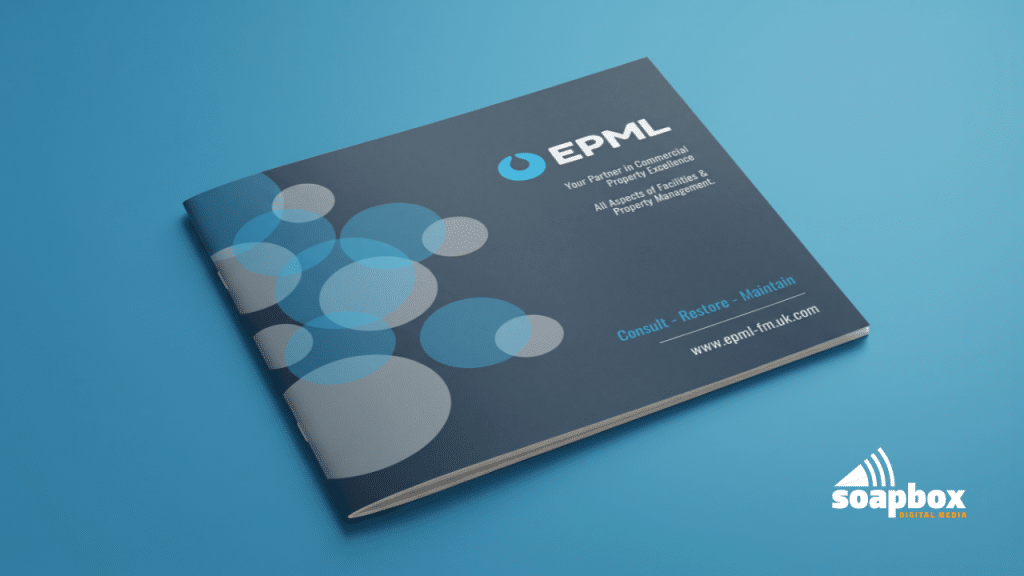
Multi-page booklet brochures use staple binding or saddle stitching when the content runs deeper than a single sheet.
Company brochures, product guides, and service presentations often run to 8 or 12 pages, giving room for photography, case studies, and full specifications.
Bi-fold brochure
A bi-fold is a single fold creating four panels, and works well for event programmes or simple service overviews.
A bulletin or pamphlet follows a similar structure, and you’ll often see this format used by public sector organisations and charities.
Digital brochure
Digital brochures are saved as PDFs, uploaded to websites, or distributed digitally by email and QR code.
New brochures for a product launch can reach hundreds of prospects the morning the design is finalised, with no print run and no lead time.
For businesses working nationally, a well-designed digital brochure gives you the same professional presentation as print without the constraint of geography.
What goes in a brochure?
A good brochure layout guides the reader from the headline through the key selling points to the contact information.
The right layout entices readers to explore naturally, rather than making them search for what they came for.
Most brochures include:
- Your logo and brand colours, consistent with the rest of your marketing
- A headline that explains what you do and who you do it for
- Product or service details, focused on features and benefits rather than specifications
- Visuals: photography or illustration that shows your work in context
- Contact information: phone number, website, email, and address
- A clear call to action telling the reader exactly what to do next
Your colour scheme, typography, and photography style should match your other marketing materials, from your website to your business cards. Consistent branding makes a brochure feel like part of a professional set rather than a one-off leaflet.
Clarity matters more than decoration.
A brochure that looks impressive but takes effort to read rarely gets the response rate it deserves.
Lead with the most useful information, keep the layout easy to scan, and make the contact details impossible to miss.
Brochure vs leaflet, flyer, and catalogue
A leaflet is typically a single sheet, unfolded or with a single fold, and it’s cost-effective for large print runs, fast to produce, and designed for brevity.
A flyer is similar but usually single-sided and unfolded, used for quick promotional messages like events, offers, and local announcements.
A brochure goes into more detail. More panels through folding or binding create more space to tell the full story.
A leaflet promotes a sale ending this Sunday. A brochure explains what your business does well enough that someone keeps it and calls you three weeks later.
The difference between a brochure and a catalogue comes down to scope.
A catalogue is exhaustive: products, services, prices, and reference codes, designed to be browsed from start to finish. A brochure presents a curated message to a specific audience, covering what they need to know rather than everything you offer.
Print brochures vs digital brochures
A well-printed brochure communicates quality before anyone reads a word.
The paper stock, the print resolution, the accuracy of brand colours: each carries a message about the business behind it, and no PDF fully replicates what a physical piece does.
Digital brochures make sense when your audience is spread across the country or when you need to update content regularly.
A PDF distributed digitally, shared via QR code at a trade show, or embedded on your website reaches people you’d never hand a print copy to in person.
Print or digital, the design principles apply equally.
Your layout should be clear, your visuals strong, and your message should convey the right impression from the first panel to the last.
Just make sure when designing brochures for print, you factor in important elements such as crop marks and bleed marks.
How do you design a brochure?
Start by identifying the target audience and the single action you want them to take after reading. Every layout and copy decision should point towards that goal.
Pick a format that matches the volume of content.
A tri-fold works for a clear service overview. A booklet suits a detailed company presentation or a multi-product set-up.
Before design starts, get your brand assets together: logo, colour palette, approved photography, and any graphic elements used across your other materials.
If you’re working from a brochure template, treat it as a starting point.
Generic templates rarely carry a specific brand well, and most look indistinguishable from competitors in the same category. A brochure designed around your message and visual identity performs better and lasts longer.
Before going to print, test the content on someone unfamiliar with your business. If they can’t explain what you do and how to contact you after a single read, it needs more work.
Get a brochure designed by our team
We design and print brochures for businesses across Glasgow and the UK. From simple tri-folds to full-colour multi-page booklets, we handle everything. Concept, copy, design, print, and delivery.
A well-designed brochure is a cost-effective way to promote your business to the people you meet in person. We make the whole process straightforward from brief to finished piece. And if you need something else printed, posters, wedding invitations, or more, we’ve got you covered!
Call us on 0141 429 1356 or contact us online for a free quote.